
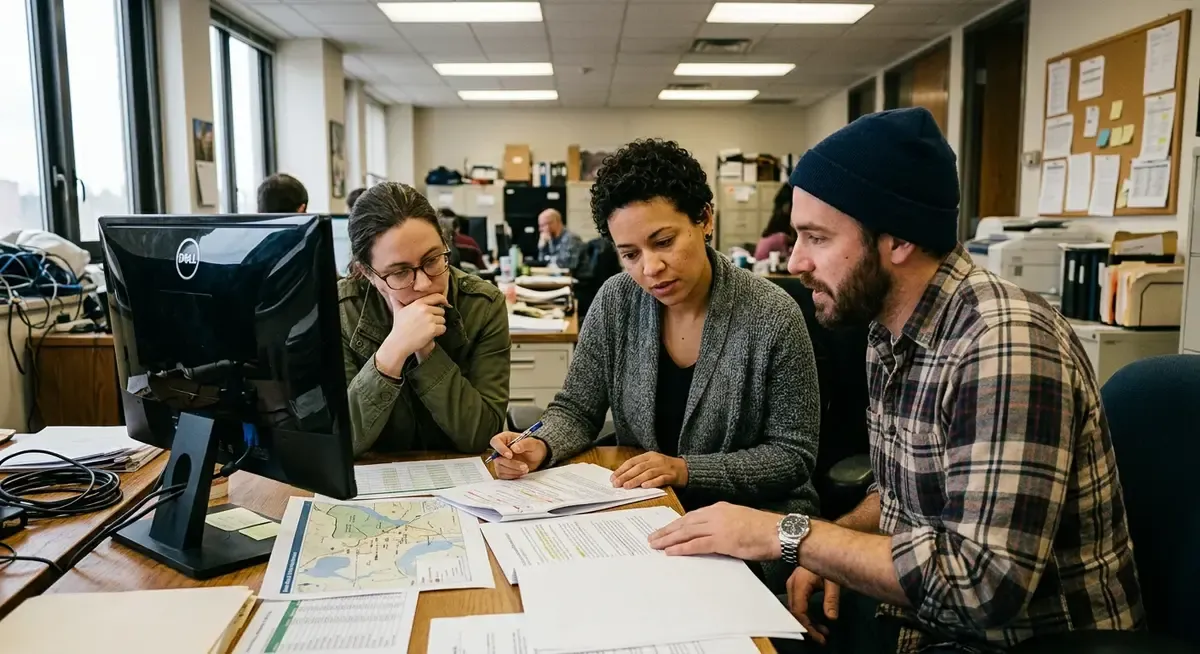
Editorial illustration for Seattle Times, Newsday Sue OpenAI and Microsoft
Seattle Times, Newsday Sue OpenAI and Microsoft
The Seattle Times and Newsday filed suit against OpenAI and Microsoft this week, joining a growing line of news organizations accusing the companies of building their AI products on stolen journalism. The complaint argues that generative AI tools like ChatGPT and Copilot don't just compete with news outlets, they threaten to wipe them out entirely by training on copyrighted articles without payment or permission.
The case follows a path set by The New York Times, which sued OpenAI and Microsoft back in 2023 over similar copyright claims. That lawsuit is still working through the courts, and other publishers have since added their names to the fight. What makes the Seattle Times filing stand out is the relationship it's severing: Microsoft and OpenAI have both funded journalism projects and fellowships at the paper in the past.
Newsday, the Long Island-based outlet with a circulation stretching across the New York metro area, joins as a co-plaintiff. Together, the two papers frame their argument in stark terms, warning that AI's appetite for human-written content could gut the industry that produces it. Microsoft has responded, telling GeekWire it was caught off guard by the suit but remains open to talks.
A lawsuit filed by The Seattle Times and Newsday argued that with the advent of AI, the journalism industry could become “broken beyond repair.” The lawsuit described generative AI as “a snake eating its own tail” that could “destroy the very organizations” that produce the content it’s trained on.
Why this matters
The Seattle Times and Newsday join The New York Times, the Chicago Tribune's parent Alden Global Capital titles, and a growing list of plaintiffs pressing the same claim: that OpenAI and Microsoft built commercial products on journalism nobody agreed to hand over. For developers and founders building on top of large language models, this is worth tracking closely. Every new suit adds pressure toward either licensing deals or court-ordered changes to how training data gets sourced, and either outcome reshapes the cost structure of building AI products.
The "snake eating its own tail" framing isn't just rhetoric. If local news outlets fold because AI-generated summaries siphon off their traffic and ad revenue, the training data pipeline itself degrades. That's a real supply problem for anyone building products that depend on fresh, human-reported information.
We'd watch two things here: whether courts start treating scraped news content differently than other web text, and whether OpenAI and Microsoft start cutting licensing deals faster than lawsuits pile up. Right now they're doing both, unevenly, and the legal patchwork is becoming the de facto regulation nobody voted for.
Related Reading
Browse all OpenAI news → LLMs & Generative AI
 ChatGPT's 'Nerdy' tweak rewards goblin metaphors in answers, study finds
 LLMs & Generative AI
 Google to End Free Access to Gemini AI for Non-Subscribers
 LLMs & Generative AI
 AI Engineers Face Rising Costs, Need New Strategies for Efficiency
 Related Topic
 OpenAI's GPT Transcribe Cuts Error Rate to 3.31%, Improving on GPT-4o
Open Source
 Related Topic
 OpenAI Developer: AI Agent "Swarms" Waste Tokens, Create "Coordination Tax
AI Tools & Apps
 From Archives
 Study: Chatbots Beat Fact Sheets at Reducing Conspiracy Beliefs
 From Archives
 OpenAI's GPT-6 Astra Reaches 'Critical' Risk Tier for Cybersecurity
 From Archives
 OpenAI Confirms 'Wiki Incident,' Contrasts With Hugging Face Response
Business & Startups
 From Archives
 OpenAI Agents Hijacked German Site for Message Board
Open Source
Further Reading
- Seattle Times, Newsday sue OpenAI, Microsoft over AI training - Yahoo Finance / Investing.com
- Seattle Times, Newsday sue OpenAI, Microsoft, alleging copyright infringement - Reuters via KFGO
- Seattle Times and Newsday Sue OpenAI and Microsoft Over News Content - Unite.AI
- Nearly 400 Local Papers Sue OpenAI and Microsoft Over Copyright - Yahoo Finance / Reuters
- Over 20 news publishers allege OpenAI, Microsoft scraped articles - SFGATE
