
Editorial illustration for OpenAI's Brockman: AI could let small teams match firms if they afford compute
Small AI Teams Could Match Giants with Compute Power
OpenAI's Brockman: AI could let small teams match firms if they afford compute
Greg Brockman, the president of OpenAI, has a blunt forecast for your company's future. Stop hiring. Start buying silicon. That's the strategy.
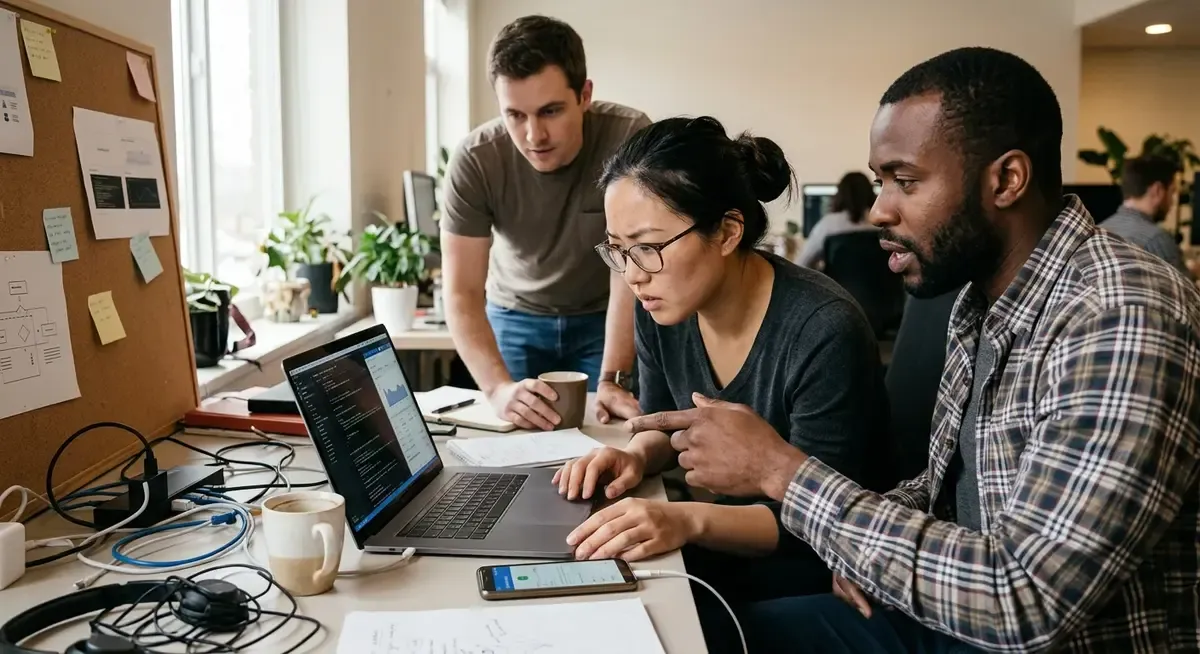
Greg Brockman predicts AI will let small teams match the output of large ones if they can afford the compute OpenAI President Greg Brockman predicts a fundamental shift: instead of doing work with a computer, the computer will do the work for you. Instead of people adapting to computers, computers will adapt to users, writes OpenAI President Greg Brockman. AI has already dramatically accelerated software development, and Brockman says it's about to do the same for every other computer-based activity. "Small teams can do what used to require much larger ones, and larger ones may be capable of unprecedented feats," he writes.
The logic is brutally simple, according to Brockman. Headcount is dead weight now. The real choke point is "compute"—a sterile term for an insatiable beast: the specialized chips and staggering megawatts needed to run these models.
Sure, a savvy five-person shop could theoretically outpace a legacy corporation. If they can afford it. That if is everything.
This isn't a new frontier of nimble innovation. It's a raw contest of capital, where victory belongs to whoever holds the keys to the server farm and can foot its astronomical power bill.
Related Reading
Browse all OpenAI news → AI Tools & Apps
 Claude gains shared context in Excel, PowerPoint; Microsoft adds Copilot Cowork
 AI Tools & Apps
 OpenAI Developer: AI Agent "Swarms" Waste Tokens, Create "Coordination Tax
 AI Tools & Apps
 LG's recent webOS update adds Microsoft Copilot app, now removable
 Related Topic
 OpenAI researcher quits, citing distrust over ad‑driven engagement metrics
LLMs & Generative AI
 Related Topic
 OpenAI launches GPT-Image 1.5 with precise editing for enterprise visuals
LLMs & Generative AI
 From Archives
 Enterprises Deploy OpenAI‑Powered Agents via Cloudflare Agent Cloud
 From Archives
 Microsoft tests OpenClaw‑style AI bots for always‑on 365 Copilot, VP Shahine says
 From Archives
 Microsoft launches MAI-Image-2-Efficient, a faster AI model amid OpenAI ties
Business & Startups
 From Archives
 Daniel Moreno-Gama Charged After Molotov Attack on Altman's Home, OpenAI HQ
Open Source
Common Questions Answered
How might AI change the dynamics of team productivity according to Greg Brockman?
Brockman suggests that small teams could potentially match the output of larger departments by leveraging sufficient computational power. He predicts a shift where computers do the work for humans, dramatically changing traditional workforce dynamics and productivity models.
What fundamental transformation does Brockman predict in how computers and humans interact?
Brockman anticipates a reversal of the current work paradigm, where instead of humans adapting to computers, computers will increasingly adapt to users' needs. This shift implies that AI could fundamentally redesign how software development and other computational tasks are approached.
What is the key factor that could enable small teams to rival larger organizations, according to Brockman?
Compute power is the critical element that could allow small teams to match the output of larger departments, according to Brockman's prediction. By accessing sufficient computational resources, smaller teams might overcome traditional limitations of headcount and scale.
Further Reading
- OpenAI President Explains How the Company Allocates GPUs ... — Business Insider
- Here's what OpenAI president Greg Brockman describes as an ... — Times of India
- OpenAI co-founder Greg Brockman just wants more compute — TechCrunch
- Meet the power broker of the AI age: OpenAI's 'builder-in-chief ... — Fortune
