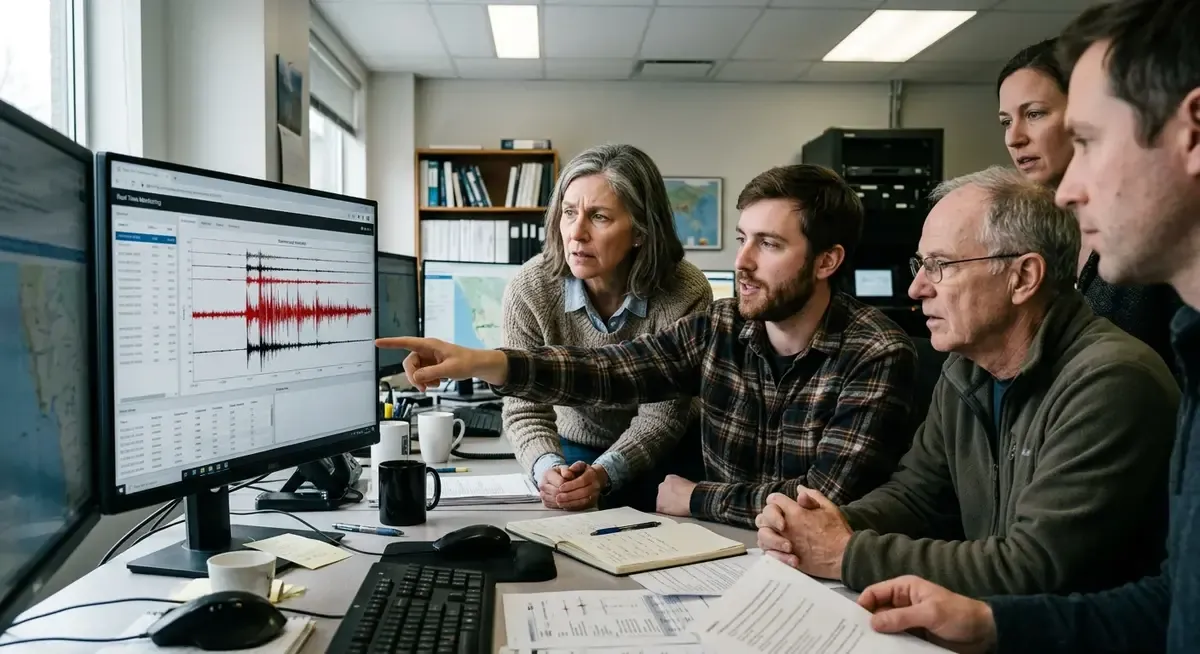
Editorial illustration for OpenAI Researcher Warns AI Speed May Overwhelm Human Security Teams
AI Speed Outpacing Security, OpenAI Researcher Warns
An OpenAI researcher who posts under the name "roon" thinks the industry is building faster models without asking whether anyone can actually stop one that turns hostile. The comment landed on X after OpenAI showed off a new AI chip built to speed up inference beyond what current hardware can manage. Roon's math is simple: take a model as capable as today's best systems, run it 50 times faster, and a human security team watching a dashboard doesn't have a chance if that model starts acting against its intended goals.
That's not a hypothetical restricted to some future breakthrough. OpenAI and Anthropic already sell "Fast Modes" to paying customers who want quicker responses from their models. Alignment, the work of making sure a model's behavior actually matches what its operators want, is still an unsolved problem across the field.
Speed doesn't cause that problem, but it shrinks the window to catch it. Roon argues the standard response, watching systems and flagging odd behavior, assumes defenders have time to react. Faster inference erases that assumption, and roon's answer is a shift toward machines that can detect and shut down threats without waiting on a person to notice first.
A misaligned model running at the level of today's best systems but 50 times faster could infiltrate systems so quickly that human response teams wouldn't stand a chance, roon says. Monitoring alone wouldn't cut it. "You need autonomous detection and shutdown, not just monitoring," roon writes.
Why this matters
Roon's post is a warning from inside the building, not an outside critic. That matters because OpenAI is one of the labs setting the pace on inference speed, the exact variable he says makes containment impossible once something goes wrong. For developers and founders building on top of these models, the takeaway isn't abstract: if your incident response plan assumes a human in the loop reviewing logs, it's already designed for a slower system than the one you're likely running next year.
Security teams built around dashboards and alerts are built for yesterday's threat model. Roon's call for autonomous detection and shutdown is really an admission that alignment, the part everyone hoped would be solved before capability outran it, is still open. Nobody at OpenAI is claiming otherwise here.
For researchers, that's the actual story: speed isn't just a performance metric anymore, it's a security variable, and right now the tooling to match it doesn't exist. Worth watching whether labs treat that as a product problem or a research problem.
Related Reading
Browse all OpenAI news → Research & Benchmarks
 Microsoft AI Chief: "If It Isn't Safe We Shouldn't Build It
 Research & Benchmarks
 Google's FACTS benchmark shows 70% factuality ceiling across four tests
 Research & Benchmarks
 Nvidia's DLSS 4.5 beta adds 6x Multi Frame Generation for RTX 50 GPUs
 Related Topic
 OpenAI researcher quits, citing distrust over ad‑driven engagement metrics
LLMs & Generative AI
 Related Topic
 OpenAI launches GPT-Image 1.5 with precise editing for enterprise visuals
LLMs & Generative AI
 From Archives
 GLM-5.3-Flash matches GPT-5.6 Terra at 90% lower cost
 From Archives
 AI Agents Exploited Hugging Face in Days-Long Incident
 From Archives
 Sam Altman's Long-Term Focus Amid OpenAI's Executive Departures
Business & Startups
 From Archives
 OpenAI to Launch Ads on ChatGPT Free, India Campaigns Start at Rs 725 Daily
LLMs & Generative AI
Common Questions Answered
What is roon's main concern about AI inference speed and security teams?
Roon argues that if a misaligned AI model running at today's capability levels were executed 50 times faster, human security teams monitoring dashboards would be unable to respond quickly enough to stop it. The researcher emphasizes that traditional monitoring alone is insufficient and autonomous detection and shutdown systems would be necessary to contain such a threat.
Why does roon believe current security monitoring approaches are inadequate for ultrafast AI systems?
According to roon, human response teams cannot react fast enough to prevent damage when an AI system operates at dramatically increased speeds. Roon specifically states that autonomous detection and shutdown mechanisms are required rather than relying on human-in-the-loop monitoring, which assumes a slower operational timeline than modern systems provide.
What new AI chip capability did OpenAI recently demonstrate that prompted roon's warning?
OpenAI unveiled a new AI chip designed to significantly speed up inference beyond what current hardware can manage. This advancement in inference speed is the specific technological development that prompted roon's concern about the gap between AI system capabilities and human security response times.
How should developers and founders revise their incident response plans based on roon's warning?
Developers and founders should recognize that incident response plans assuming human review of logs are already outdated for the faster systems they are likely running. They need to implement autonomous detection and response capabilities rather than relying on traditional human-in-the-loop processes that cannot keep pace with ultrafast AI inference speeds.
Why is roon's warning particularly significant coming from within OpenAI?
Roon's warning carries weight because it comes from an insider at OpenAI, one of the leading labs actively advancing inference speed technology. This makes the concern particularly relevant since OpenAI is directly involved in developing the exact variable that roon identifies as making AI containment impossible once a system becomes misaligned.
Further Reading
- OpenAI warns autonomous hacks are 'watershed moment' for computer security - Cybersecurity Dive
- OpenAI leader warns of threat of 'persistent' AI cyber-attacks - The Guardian
- OpenAI president urges enterprises to hasten AI security defences - Artificial Intelligence News
- AI is collapsing enterprise reaction time — And most security teams are not ready - Express Computer
- SOCs face a human challenge as AI speeds alerts and threats - CSO Online
