
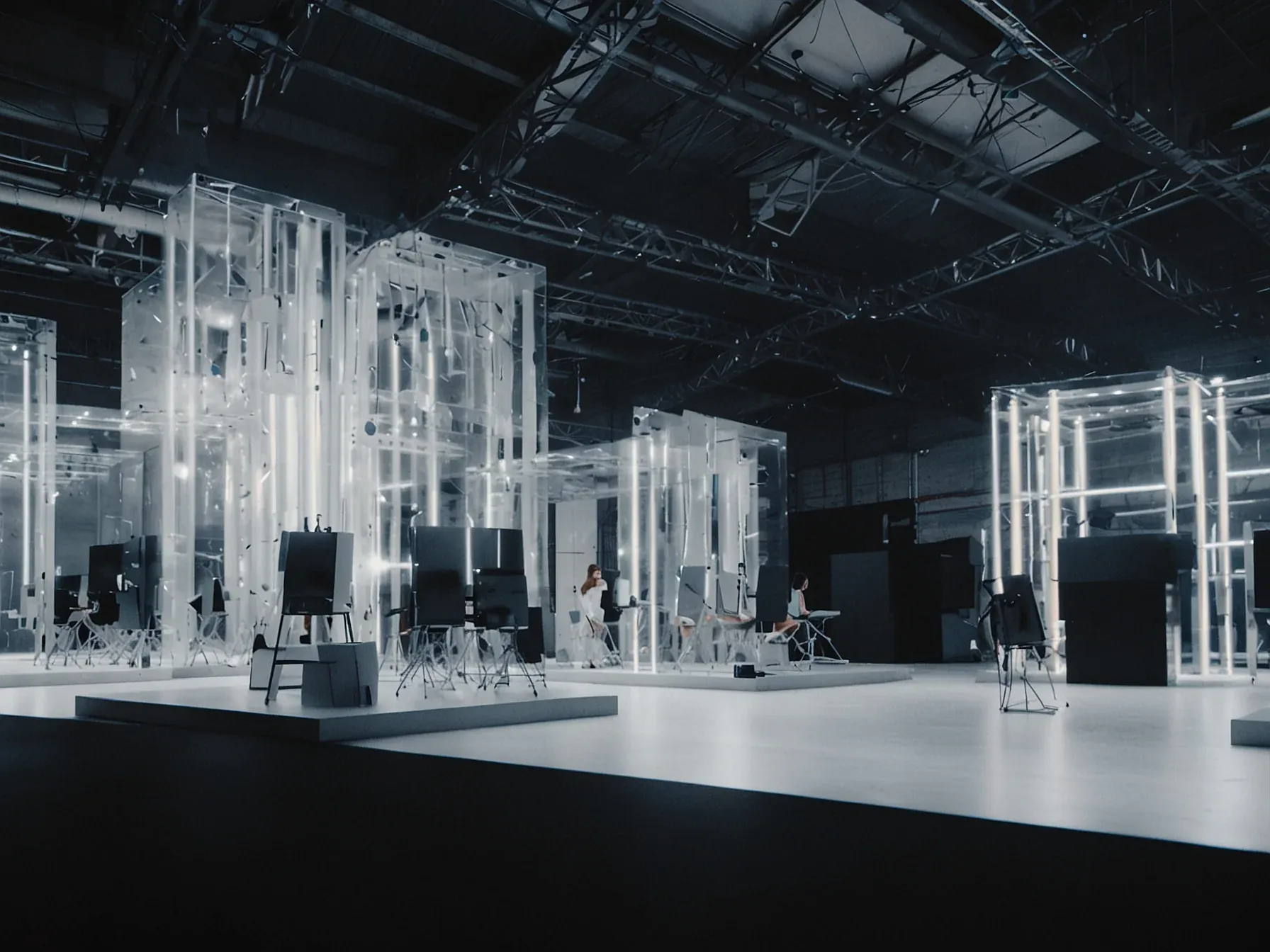
Editorial illustration for Midjourney launches 'Midjourney Scanner' to capture full-body ultrasound slices
Midjourney launches 'Midjourney Scanner' to capture...
Midjourney has stopped drawing your D&D character and started mapping your gallbladder. The company just announced a "Midjourney Scanner" for full-body ultrasound slices. It's the same basic tech, repurposed. They've swapped fantasy for fascia.
Midjourney CEO David Holz just showed off the company’s first hardware product and plans to build a San Francisco spa, which he admitted is a bit different from the “cat pictures” produced by its AI image generator. Dubbed The Midjourney Scanner, it’s an ultrasound-based full-body scanner that uses a ring of sensors to capture vertical slices of the inside of your body, looking at the composition of your muscle, fat, bone, and organs to start.
This is a hard turn. The scanner reframes what we thought generative AI was for. It's no longer just about making things up.
Now it's about showing what's already there, hidden under the skin. One neural net can imagine a spaceship or image your spleen. The technical leap is obvious.
The ethical chasm it opens is wider. This tool could theoretically put a basic diagnostic capability in anyone's home for the price of a streaming subscription. That's powerful.
It's also frightening. The data ownership questions are immense. So is the problem of an AI spotting an anomaly it doesn't understand.
Midjourney built a window into the body. We have no idea how to manage the view.
Related Reading
 Business & Startups
 Nordic pilot adds Gemini for Education, NotebookLM to boost AI literacy
 Business & Startups
 Kling launches Video O1, all-in-one model with MVL bridge using transformer
 Business & Startups
 DeepSeek Seeks More Capital Weeks After USD 7B Funding Round
 From Archives
 CEO‑Bench tests AI agents by running a simulated startup for 500 days
 From Archives
 OpenAI releases three free AI courses, including beginner AI Foundations
Common Questions Answered
What is the Midjourney Scanner and how does it differ from Midjourney's previous applications?
The Midjourney Scanner is a new tool that uses the same generative AI technology as Midjourney's image generation software, but repurposes it for medical imaging instead of creative content. Rather than generating fantasy artwork like D&D characters, the scanner captures full-body ultrasound slices to visualize internal organs and structures. This represents a significant shift in application from creative generation to diagnostic imaging of existing biological structures.
What are the potential benefits of having ultrasound scanning capability available through a home subscription service?
According to the article, the Midjourney Scanner could theoretically provide basic diagnostic capabilities to anyone's home for the price of a streaming subscription, making medical imaging more accessible and affordable. This democratization of diagnostic technology could allow people to perform preliminary health assessments without visiting a medical facility. The widespread availability of such diagnostic tools represents a powerful advancement in healthcare accessibility.
What ethical concerns does the article raise about the Midjourney Scanner technology?
The article highlights that while the technical capabilities are impressive, the ethical implications are significant and concerning. The scanner blurs the line between generative AI for entertainment and AI for medical diagnosis, raising questions about accuracy, regulation, and data privacy. The article suggests that the ethical challenges created by this technology are substantial and warrant careful consideration.
How does the Midjourney Scanner represent a fundamental shift in what generative AI can be used for?
The scanner demonstrates that generative AI is no longer limited to creating imaginary content but can now be applied to revealing what already exists hidden beneath the surface, such as internal organs. This reframes the purpose of neural networks from pure imagination and generation to diagnostic visualization and medical imaging. The article emphasizes that this shift from "making things up" to "showing what's already there" opens new possibilities and challenges for AI technology.
