
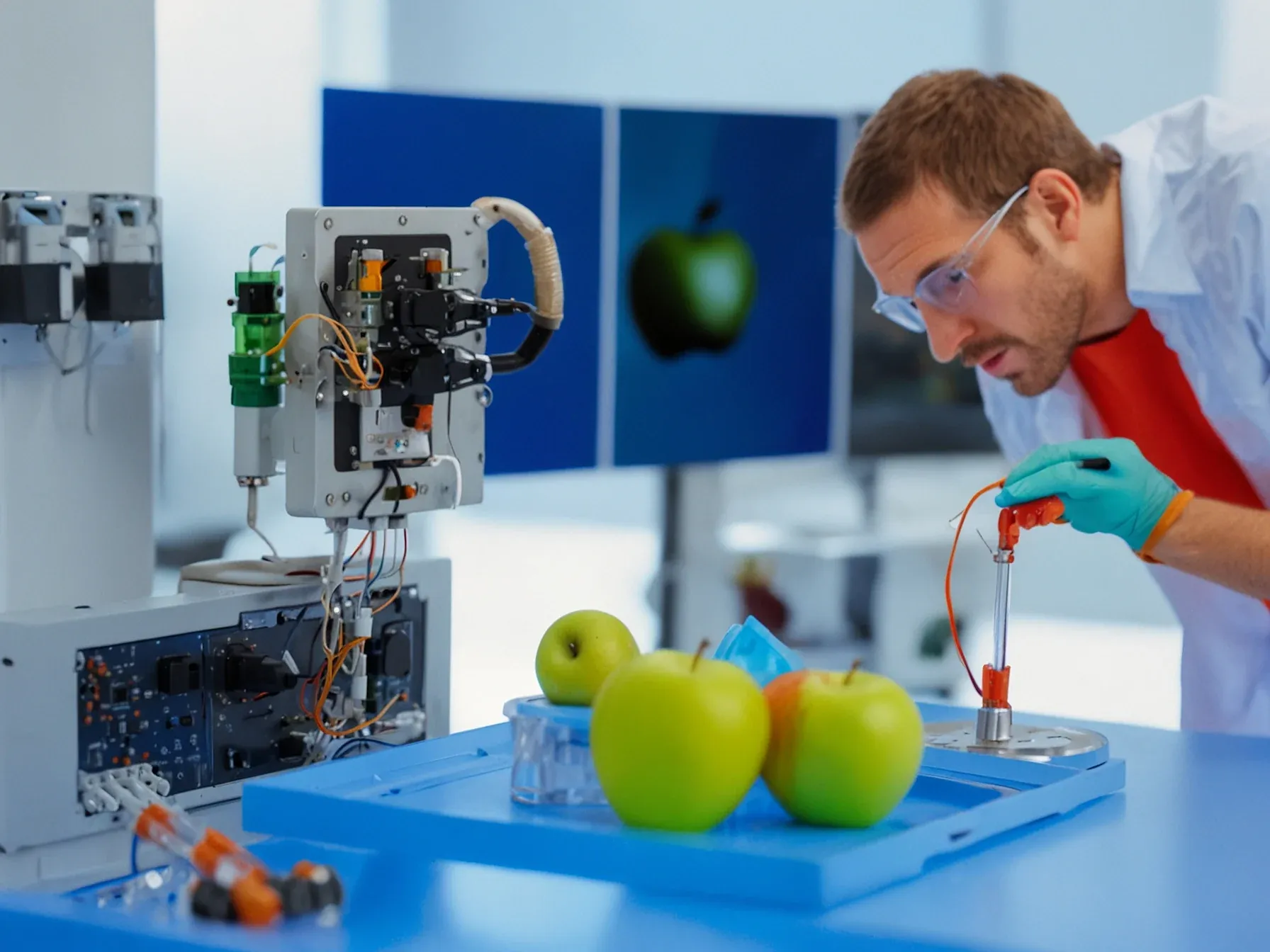
Editorial illustration for Google Gemini Deep Think Tops ARC-AGI-2, Nvidia Reveals New Open Platform
Google Gemini Tops ARC-AGI-2 with Breakthrough Performance
Google Gemini's Deep Think tops ARC-AGI-2 benchmark; Nvidia announces new open
Google has put its most advanced reasoning engine behind a paywall. Available only to top-tier Gemini subscribers, the new Deep Think mode now claims the top score on the ARC-AGI-2 benchmark. That test is a grueling set of math, science, and logic puzzles. Its entire purpose is to answer one stubborn question: can these models truly reason, or are they just brilliant parrots?
Available only to Google AI Ultra subscribers in the Gemini app, Deep Think mode tops the ARC-AGI-2 reasoning benchmark and targets complex math, science, and logic problems. Nvidia announces new open AI models and tools for autonomous driving research. Alongside the releases, Nvidia published a Cosmos Cookbook on GitHub with guides, inference resources, and workflows to help developers curate data, generate synthetic data, and fine-tune Cosmos-based models for autonomous driving research.
Black Forest Labs launches Flux.2 AI image models to challenge Nano Banana Pro and Midjourney. It's a new image generation and editing system complete with four different models designed to support production-grade creative workflows.
Nvidia took the opposite tack. The chip giant released open models and a comprehensive GitHub guide called the Cosmos Cookbook. It’s a toolkit for generating the synthetic data self-driving AI desperately needs.
Meanwhile, Black Forest Labs is aiming squarely at Midjourney with Flux.2, a four-model suite built for professional creative work. This week’s flurry of releases from DeepSeek and Mistral reveals a splintering strategy. One faction, like Google, gates elite reasoning.
Another, like Nvidia, builds open infrastructure. A third sells professional-grade generation. The message is clear: the age of free, flashy demos is over.
The industry is now selling utility, and it won’t be cheap.
Related Reading
Browse all Google news → Open Source
 D&B rebuilds 642 million‑business database after AI agents hit limits
 Open Source
 Box CEO Aaron Levie Says AI Will Drive "Biggest Cybersecurity Upgrade
 Open Source
 Study: 6.7% of Deepfake Requests on Hugging Face Targeted Children
 Related Topic
 Google to End Free Access to Gemini AI for Non-Subscribers
LLMs & Generative AI
 Related Topic
 NVIDIA and Google Cloud let developers scale AI from prototype to production
Market Trends
 From Archives
 Apple chip chief Johny Srouji seriously considering move to another company
 From Archives
 Apple’s STARFlow-V Generates Video Without Diffusion, but Long Sequences Falter
 From Archives
 SynthID on Gemini Tested in Early Trials to Detect AI-Generated Content
LLMs & Generative AI
 From Archives
 Google Maps to get hands-free conversational driving via Gemini
Industry Applications
Common Questions Answered
How does Google Gemini's Deep Think mode perform on the ARC-AGI-2 reasoning benchmark?
Google Gemini's Deep Think mode has topped the ARC-AGI-2 reasoning benchmark, demonstrating exceptional performance in solving complex mathematical, scientific, and logical problems. This breakthrough is currently available exclusively to Google AI Ultra subscribers in the Gemini app.
What resources has Nvidia released for autonomous driving AI research?
Nvidia has published a Cosmos Cookbook on GitHub, providing developers with comprehensive guides, inference resources, and workflows for autonomous driving research. The release includes open AI models and tools designed to help researchers curate data, generate synthetic data, and fine-tune Cosmos-based models.
What makes Google Gemini's Deep Think mode significant in AI development?
Google Gemini's Deep Think mode represents a targeted approach to solving complex intellectual challenges, showcasing advanced reasoning capabilities across math, science, and logic domains. This breakthrough signals a potential leap in machine intelligence, pushing the boundaries of what AI systems can accomplish in sophisticated problem-solving scenarios.
Further Reading
- Gemini 3 Deep Think is now available — Google Blog
- Gemini 3 Deep Think: Insane 45% ARC Score & $250 Gamble — BinaryVerse AI
- Google Gemini 3 Benchmarks (Explained) — Vellum AI
- ARC Prize 2025 Results and Analysis — ARC Prize
- Gemini 3 Deep Think Mode delivers state-of-the-art performance for Gemini Ultra subscribers — Neowin
