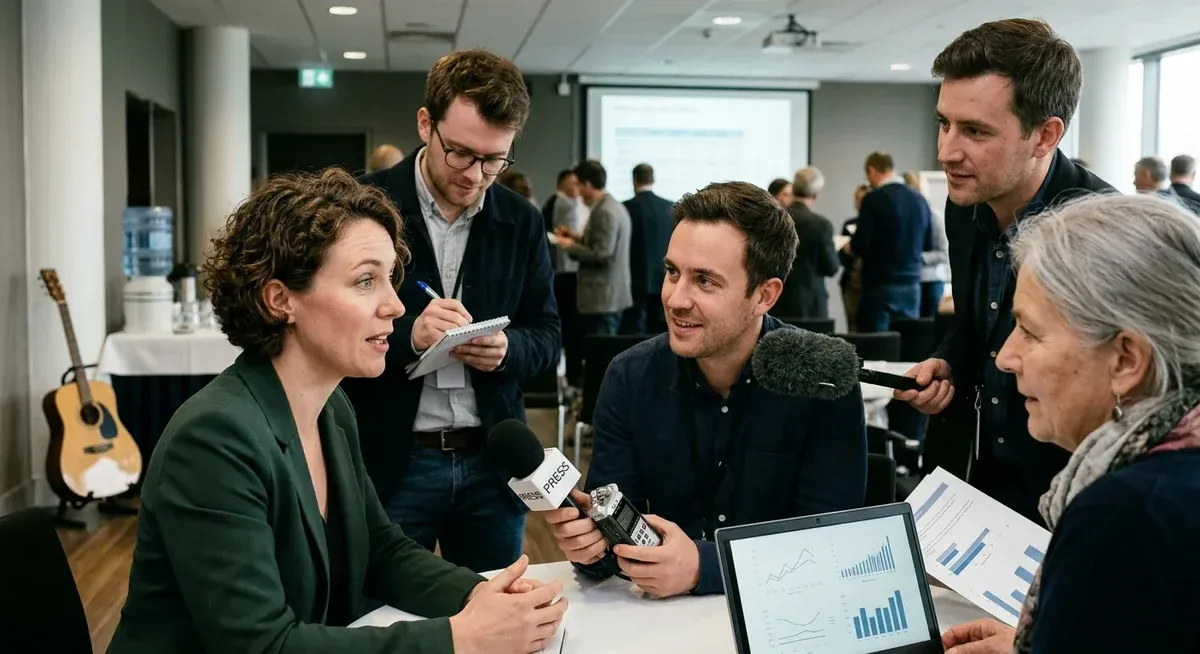
Editorial illustration for Fender CEO Says Your Bandmates Are "Analog AI
Fender CEO Calls Bandmates 'Analog AI'
Fender CEO Edward "Bud" Cole gave an interview to T3 back in May, timed to the Telecaster's 75th anniversary. It didn't get much attention at first. Now it's circulating again, and the timing couldn't be worse for Fender.
The company is already fending off backlash from guitar builders after sending cease-and-desist letters over the Stratocaster body shape, a move that's turned a chunk of the online guitar community against the brand. Some prominent guitar YouTubers have said publicly they're finished buying Fender products.
Into that mess comes Cole's resurfaced take on artificial intelligence and what it means to play in a band. T3 editor-in-chief Mat Gallagher's piece mostly paraphrases the CEO rather than quoting him at length, and Fender hasn't responded to a request for comment. But the parts that are direct quotes have caught fire online, particularly a comparison Cole draws between AI training data and the process of learning cover songs, plus a broader claim about what AI in music actually is and how long it's been around. Here's what he told T3.
Cole’s philosophy is that AI in music is nothing new. “I think AI has existed in music as long as there’s been recorded music,” he says. While the biggest barrier to playing guitar is the time it takes to learn the instrument, it’s the second barrier, writing songs, where he believes AI plays a part.
Why this matters
Cole's framing is a tell. Calling a bandmate "analog AI" isn't a compliment to musicians, it's a rebrand of collaboration as a feature that machines can eventually replace. That matters for anyone building AI products around creativity, because it shows how easily "AI as a tool" language slides into "AI as a substitute for other humans" without anyone noticing the shift.
Fender's timing makes it worse: a company already accused of trying to fence off decades-old guitar shapes with copyright claims is now positioning its own products as replaceable by software, while still wanting to own the physical form factor. For founders pitching AI collaborators, songwriting assistants, or co-creation tools, this is a preview of the messaging fight ahead. Musicians didn't push back because Cole mentioned AI.
They pushed back because he compared a drummer to a chatbot. Anyone shipping AI into creative workflows should watch how fast that kind of comparison turns a fanbase hostile, and plan the copy accordingly.
Related Reading
 Business & Startups
 Nordic pilot adds Gemini for Education, NotebookLM to boost AI literacy
 Business & Startups
 Kling launches Video O1, all-in-one model with MVL bridge using transformer
 Business & Startups
 DeepSeek Seeks More Capital Weeks After USD 7B Funding Round
 From Archives
 OpenAI Targets Production AI Agents for Customer Service
 From Archives
 Fenix Flexin' New Single Sparks AI Slop Debate Over Vocal Style
Common Questions Answered
What does Fender CEO Bud Cole mean by calling bandmates 'analog AI'?
Cole uses this term to describe how musicians collaborate and learn from each other, framing human musical interaction as a form of artificial intelligence that has existed since recorded music began. He suggests that bandmates serve a similar function to AI in helping overcome creative barriers like songwriting, positioning human collaboration as something that machines could eventually replicate or replace.
According to Cole, what are the two main barriers to playing guitar?
Cole identifies the first barrier as the time it takes to learn the instrument itself. The second barrier he highlights is songwriting, which he believes is where AI can play a significant role in helping musicians overcome creative obstacles.
Why is the timing of Fender CEO's AI comments particularly controversial?
Fender is already facing significant backlash from the guitar community after sending cease-and-desist letters to guitar builders over the Stratocaster body shape, which has turned a portion of the online guitar community against the brand. Cole's comments about replacing human musicians with AI come at a moment when the company is already accused of trying to restrict decades-old guitar designs, amplifying concerns about corporate control in the guitar industry.
How does Cole's framing of 'AI as a tool' differ from 'AI as a substitute' according to the article?
The article argues that Cole's language about bandmates being 'analog AI' represents a subtle shift from positioning AI as a helpful tool to framing it as a replacement for human musicians and collaboration. This rebranding of human interaction as something machines can eventually replace is presented as a concerning way to normalize AI substitution in creative fields without explicit acknowledgment of that shift.
Further Reading
- Fender CEO compares cover bands to AI in music - Guitar.com
- Fender Celebrates The Telecaster By Turning Nashville Into ‘Tele Town’ - Forbes
- New Fender CEO: Edward 'Bud' Cole on iconic company's future - Guitar World
- Edward 'Bud' Cole appointed CEO of Fender - Music Business Worldwide
- Fender enters new era with CEO-designate Edward Bud Cole and launch of Fender Studio - Highonscore
