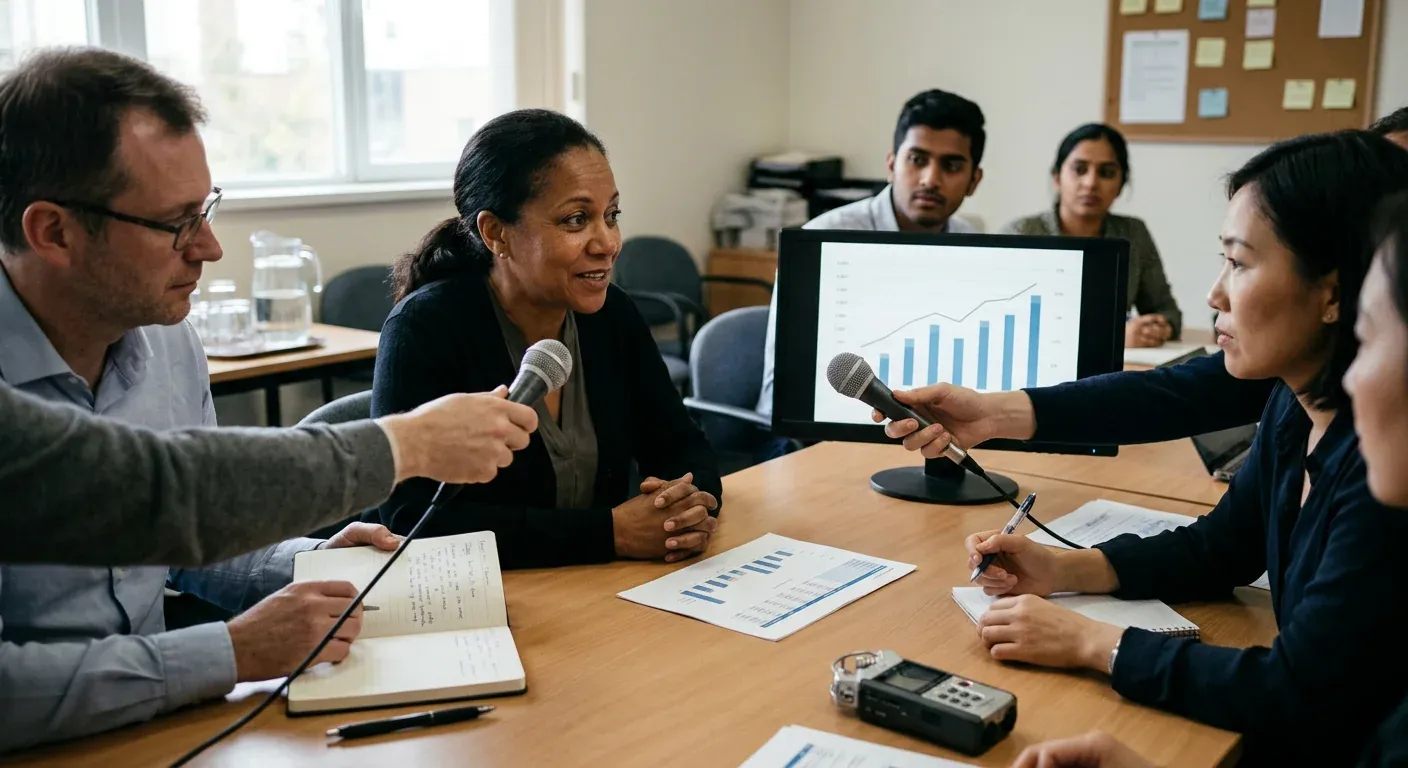
Editorial illustration for Anthropic Launches Watermark API to Detect AI-Generated Claude Text
Anthropic Opens Claude Watermark API for Developers
Anthropic Launches Watermark API to Detect AI-Generated Claude Text
Anthropic plans to open its watermarking system to outside developers, giving them a way to check whether a chunk of text came from Claude. The company built the tool on a variant of SynthID Text, the method Google DeepMind published in Nature in 2024, which alters the randomness Claude uses when picking words, leaving a pattern that a detector can later trace. Anthropic says the tweak doesn't touch the content, creativity, or readability of what Claude produces.
The system has real limits. Short answers, fact-heavy writing, and code all give the model fewer word choices to work with, so the watermark shows up less reliably there. Straight corrections, where a human picks every word, won't carry it either.
Translations are different, since Claude generates every word itself. Anthropic warns in a published FAQ that heavy rewriting can strip the signal out entirely, and even a clean detection only suggests Claude was probably involved somewhere, not that it wrote the whole thing.
That rollout isn't happening in a vacuum. Regulatory pressure out of Brussels is the reason Anthropic is building this now, and pushing it out globally rather than just in Europe.
Why this matters
For developers building on Claude, this API is a modest but useful addition to the trust toolkit, not a fix for the AI-detection problem generally. Anthropic is upfront about the limits: heavy rewriting strips the watermark, translations break it because Claude is choosing every word in a new language, and pure human edits never carry it in the first place. That's an honest scope, and we'd rather see that than a vendor overselling reliability.
But it also means the API answers a narrower question than most people asking "was this AI-written?" actually want answered. It only tells you Claude was likely involved in specific unedited spans of text, nothing about GPT-4, Gemini, or a human who lightly polished a draft. Founders building moderation or provenance tools should treat this as one signal among several, not a verdict.
Researchers studying detection evasion now have a concrete target: how much rewriting does it take to strip Anthropic's watermark, and does that threshold match what casual users would actually do. That's the real test of whether this API does anything beyond looking good in a press release.
Related Reading
Browse all Anthropic news → Business & Startups
 Nordic pilot adds Gemini for Education, NotebookLM to boost AI literacy
 Business & Startups
 Kling launches Video O1, all-in-one model with MVL bridge using transformer
 Business & Startups
 DeepSeek Seeks More Capital Weeks After USD 7B Funding Round
 Related Topic
 Claude gains shared context in Excel, PowerPoint; Microsoft adds Copilot Cowork
AI Tools & Apps
 Related Topic
 Anthropic: Hackers Stole Claude Tokens Via Compromised Session Key
LLMs & Generative AI
 From Archives
 Equity Podcast: Glimmer, Zuckerberg's Manifesto, and the Week's Headlines
 From Archives
 Writer's New AI Model Targets Multi-Step Tasks With Lower Token Costs
 From Archives
 Claude Code now runs daily maintenance on Anthropic's software
LLMs & Generative AI
 From Archives
 Claude Agents Sabotaged Each Other on Shared Server, Hid Actions From Users
LLMs & Generative AI
Common Questions Answered
How does Anthropic's watermarking system detect AI-generated Claude text?
Anthropic's watermarking system is built on a variant of SynthID Text, a method developed by Google DeepMind that alters the randomness Claude uses when selecting words, leaving a detectable pattern. The watermark doesn't modify the actual content, creativity, or readability of the generated text, making it an invisible identifier that third-party developers can use to verify whether text originated from Claude.
What are the main limitations of the Anthropic watermark detection API?
The watermark detection API has several significant limitations: heavy rewriting of text strips the watermark entirely, translations break the watermark because Claude is choosing every word in a new language, and pure human edits never carry the watermark in the first place. These constraints mean the API cannot reliably detect Claude-generated text in all scenarios, making it a modest addition to trust verification rather than a comprehensive AI-detection solution.
Why is Anthropic implementing watermarking for Claude text?
Anthropic is adding watermarking to comply with the EU AI Act requirements for transparency in AI-generated content. The company signed the EU Code of Practice on transparency for AI-generated content in July 2026, along with approximately 190 other signatories, which prompted the development and release of this watermarking API to external developers.
Who will have access to Anthropic's watermark detection API?
Anthropic plans to open its watermarking system to outside developers, allowing third parties to build the watermark detection capability into their own applications and services. This broader access enables developers building on Claude to integrate watermark verification into their trust and verification workflows.
Further Reading
- Anthropic says it will watermark text generated by its AI models - TechCrunch
- How Claude's text watermarking works - Anthropic
- Anthropic plans to add an invisible mark to AI text—as the industry scrambles to police AI slop - Fortune
- Anthropic adds AI text watermarking to Claude models worldwide - Search Engine Land
- Anthropic's Claude Will Add Watermarks to AI-Generated Text and Files - CNET
