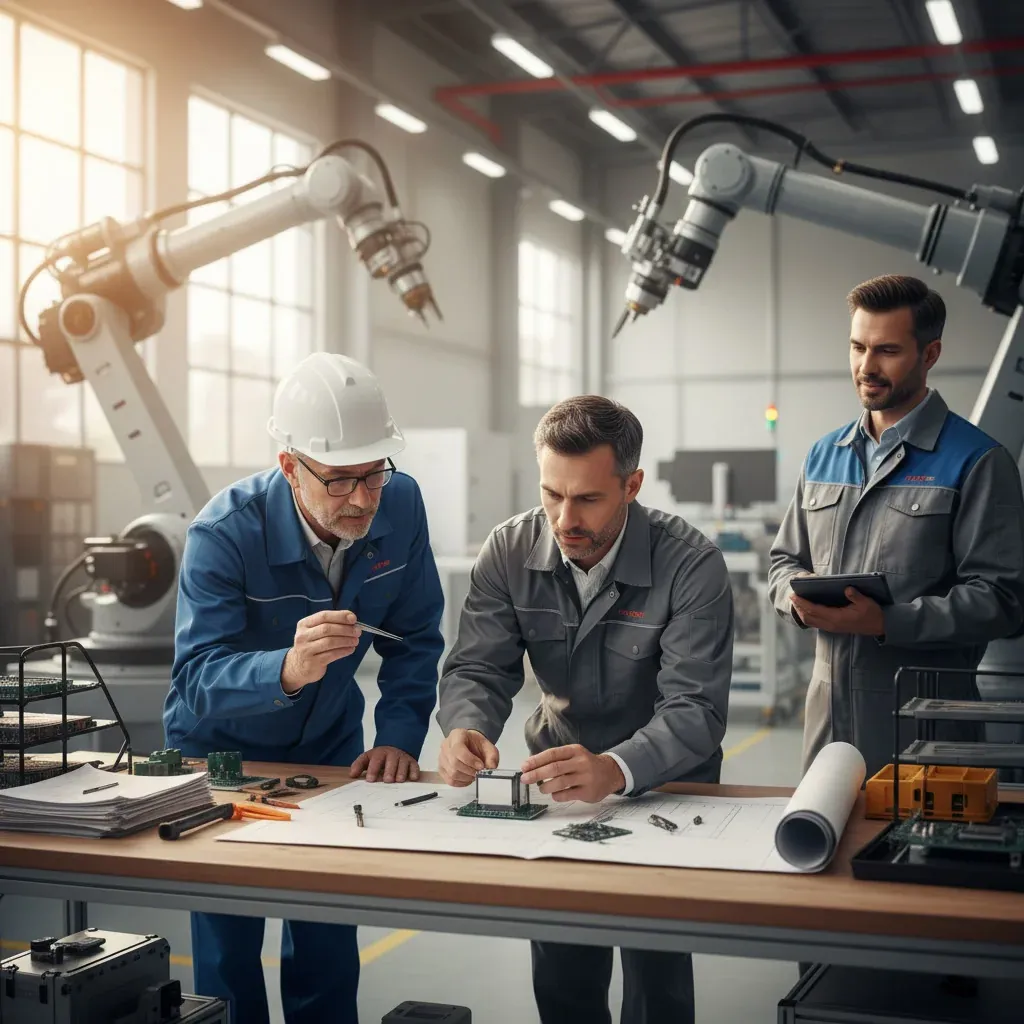
Editorial illustration for AI must stop answering and start finishing tasks, cites OpenHands, SWE‑agent
Stop Answering, Start Finishing: OpenHands & SWE-agent
Most AI is a brilliant conversationalist who leaves you to do all the dishes. It explains, it summarizes, it speculates. Then it disappears, leaving no trace of the work it promised to complete.
A new research push, citing systems like OpenHands and SWE-agent, insists on a messier, more useful standard. The goal is simple: stop talking, start finishing.
The core problem is statelessness. A chat interface is a polite, vanishing act. It has no memory of the files you opened, the logs you checked, or the permissions you granted five minutes ago.
Every question exists in a vacuum. To actually finish something, an agent needs a persistent workspace. This is a place where actions have consequences, where state is stored, and where the model's reasoning leaves a tangible footprint in the form of changed code, updated tickets, or completed forms.
A survey paper argues that AI systems won't become reliable coworkers until they finish entire tasks in persistent work environments instead of just generating answers.
The research points to a basic formula. A sticky workspace plus a reusable skill equals a real performance leap. A skill is not a prompt.
It is a packaged procedure, like a folder containing a readme, scripts, and resources. It is organizational know-how made portable. This is how you turn a clever model into a reliable worker.
You give it a desk and a manual.
That manual can become outdated, of course. Or a security risk. The researchers' warning about skills going stale or becoming attack vectors is not a minor concern.
It is the central tension of building useful, accountable systems. Modular knowledge is powerful until it's wrong. The answer is to treat skills like software: test them, version them, audit them.
The real change is ontological. An AI that finishes a task produces a result, not just text. It leaves a trail.
It owns an outcome. This transforms it from a chatbot into something that can, cautiously, be called a coworker. The workspace is the stage.
The skill is the script. The performance is the work, finally done.
Related Reading
 Open Source
 D&B rebuilds 642 million‑business database after AI agents hit limits
 Open Source
 Box CEO Aaron Levie Says AI Will Drive "Biggest Cybersecurity Upgrade
 Open Source
 Study: 6.7% of Deepfake Requests on Hugging Face Targeted Children
 From Archives
 Liquid AI releases LFM2.5-230M, adds llama.cpp, MLX, vLLM, SGLang, ONNX
 From Archives
 Meta's Astryx adds CLI and MCP server to design system used by Figma, Snowflake
Common Questions Answered
According to the article, why should AI shift from answering to finishing tasks, as cited by OpenHands and SWE‑agent?
The article argues that AI should move beyond simply answering questions to actively completing tasks, as this shift leads to more practical and autonomous outcomes. OpenHands and SWE‑agent are cited as examples of systems that embody this task-completion paradigm.
What are OpenHands and SWE‑agent, and how do they relate to the article's main argument?
OpenHands and SWE‑agent are AI systems referenced in the article as models that prioritize task completion over mere answer generation. They demonstrate how AI can autonomously execute complex software engineering tasks, supporting the article's thesis that AI should focus on finishing tasks.
What key terms from the article highlight the proposed change in AI functionality?
The key terms are 'answering' versus 'finishing tasks,' as well as the specific examples OpenHands and SWE‑agent. These terms underscore the article's central argument that AI should evolve from passive information retrieval to active task execution.
How does the article's headline challenge current AI design philosophy?
The headline directly challenges the prevailing AI focus on answering questions by advocating for a shift towards task completion. It uses OpenHands and SWE‑agent as benchmarks for this new approach, suggesting that current AI systems are inadequate for real-world productivity.
Further Reading
- Get AI to Finish the Job, Not Just Answer the Prompt — JynAI
- I Stopped Prompting AI One Task At A Time. This Works Better. — YouTube
- AI workflows: a slog, but magical moments — LinkedIn
- When does AI help with starting, thinking, or finishing tasks? — Facebook
- Is AI overhyped for task completion without human intervention? — Facebook
